Drilling for Hot Water in Laugardalur
- .
Veitur Utilities is drilling to ensure a sufficient supply of hot water for the community.
Hot Water in the Heart of the City
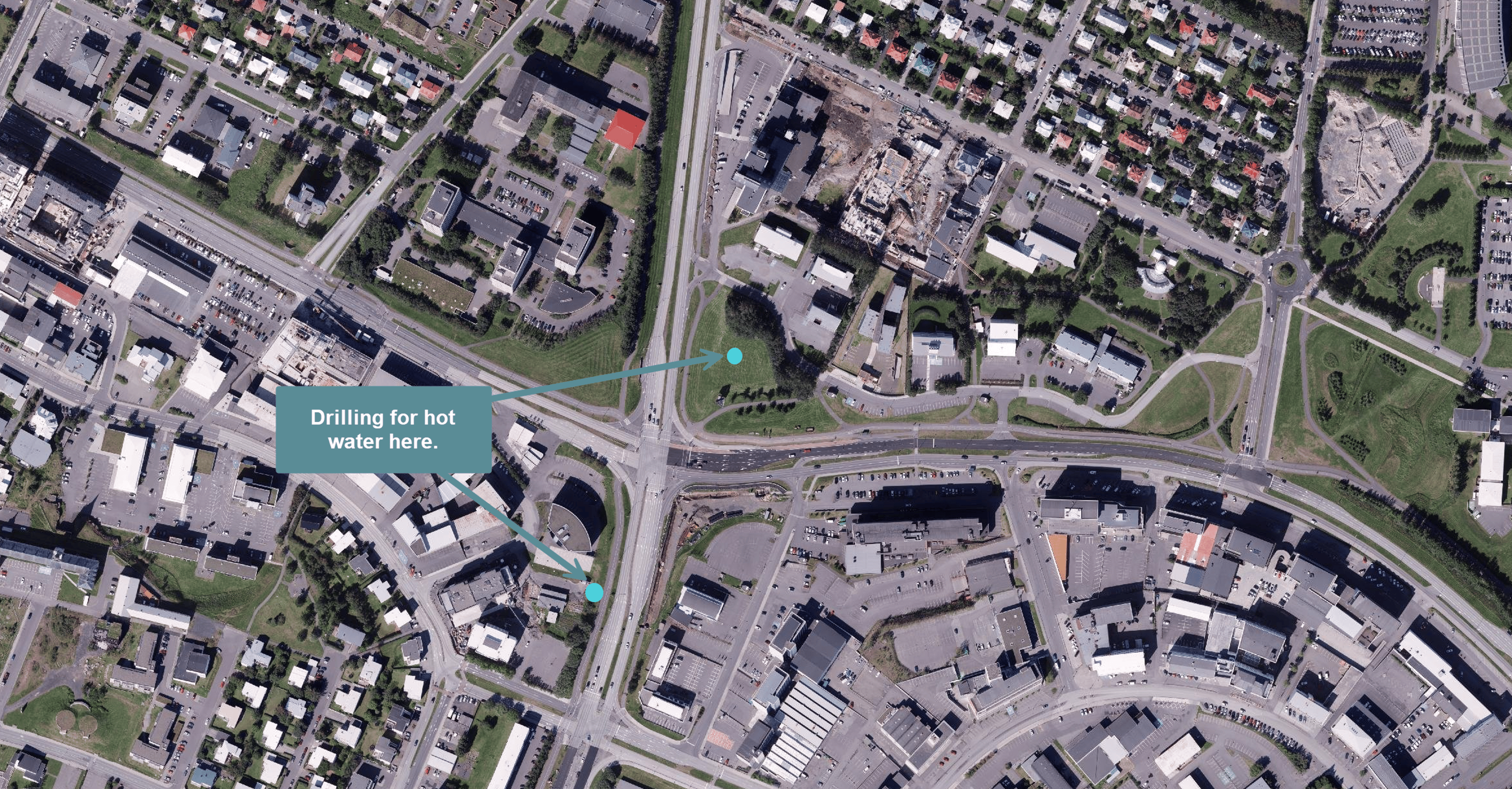
Veitur is drilling for hot water near Kringlumýrarbraut, at Engjateigur and Bolholt. The project is part of our efforts to secure a sufficient hot water supply for a growing community and improve the reliability of the district heating system.
Drilling will begin at both locations in early October 2026. Work at Bolholt is expected to be completed by the end of October, while work at Engjateigur is scheduled to continue until May 2027.
What Will Be Done?
We will mark off the work areas before installing the drilling equipment. A total of five wells will be drilled: one at Bolholt and four at Engjateigur.
The drill will bore 800–1,500 metres into the bedrock until a usable supply of hot water is reached. During drilling, water is pumped into the well to cool the drill bit and carry rock fragments and drill cuttings to the surface.
Once drilling is complete, the well will be cleaned and tested. Wells that produce sufficient hot water will later be connected to the district heating system.
Finally, the drilling equipment will be removed and the site restored.
- What You Need to Know One well will be drilled at Bolholt in autumn 2026.
- Four wells will be drilled at Engjateigur between October 2026 and the end of May 2027.
- The overall project will take eight months, from September 2026 to May 2027.
- The work areas will be fenced off and monitored around the clock.
- Traffic will be heaviest while the drilling pads are being prepared and equipment is being transported to and from the sites.
- We place strong emphasis on safety both within and around the work areas.
- Disruption will be kept to a minimum.
- When a well is discharged and tested, steam will be visible from the site. We will notify neighbours before testing begins.
Why Are We Drilling?
Geothermal energy from Laugardalur has kept Reykjavík residents warm for nearly a century. Nine wells are already in operation in the area, and we are now adding more to meet demand over the coming years.
The city is growing, and more homes need hot water. The new wells will help us meet this demand and improve the reliability of the district heating system when consumption is at its highest.
Hot water in the heart of the city tells more about geothermal drilling in the center of Reykjavík.
Schedule
Early September 2026
The drilling pads will be prepared. Construction machinery will be operating at both locations.
18 September 2026
The drilling pad will be ready, and preparations will begin for transporting the drilling rig to the site.
Late September 2026
The drilling rig and other equipment will be transported to the site. This will take several days. Drilling will begin shortly afterwards.
Late October 2026
Drilling at Bolholt will be completed, and the site will be restored as weather conditions allow.
October 2026–May 2027
Drilling will take place at Engjateigur. The work areas will remain fenced off throughout the project.
Late May 2027
Drilling at Engjateigur is expected to be completed.
Early June 2027
The drilling rig will be removed, and the site will be restored.
The schedule may change depending on how the work progresses. The latest information will always be published here.
Why Were These Locations Chosen?
This is a productive geothermal area, with several wells already supplying the district heating system. Experts from Orkuveitan and ÍSOR selected the locations based on extensive research conducted over recent decades.
Will There Be Noise?
We are taking measures to limit noise and disturbance from the drilling rig. We will use an electric rig, which is considerably quieter than a diesel-powered rig. However, people living or working near the sites may hear a low humming sound during the day, as well as occasional noise while equipment is being installed.
Noise from the drilling rig will be most noticeable during the first few days of drilling.
Will There Be More Traffic?
The safety of road users and workers is a priority. Traffic will be heaviest while the drilling pads are being prepared and when the drilling rig is transported to and from the sites. Traffic will be limited while drilling is underway.
At times, pedestrians, cyclists or motorists may need to follow alternative routes. We will keep closures to a minimum and clearly mark all diversions.
What Happens When a Well Is Tested?
Once drilling is complete, the well will be discharged and tested. A large plume of steam may be visible from the site for one day. This is a normal part of the process.
We will notify neighbours before testing begins.
Is the Work Area Safe?
Safety is always Veitur’s highest priority. The work area will be fenced off and monitored around the clock.
Could the Drilling Affect Nearby Buildings?
We do not expect the drilling to affect nearby buildings or other structures. We are not aware of any cases in Iceland where comparable drilling operations have caused damage to neighbouring properties.
What Happens to the Water Used During Drilling?
The water carries soil and rock fragments out of the well. The coarsest material is filtered out on site. The water then enters the sewer system and passes through a treatment plant before being discharged into the sea.
Project Manager: Jón Örn Jónsson
Communications: Silja Ingólfsdóttir
Drilling Contractor: North Tech Drilling